
How Robotic Surgery Is Improving Outcomes for Lung Cancer Patients
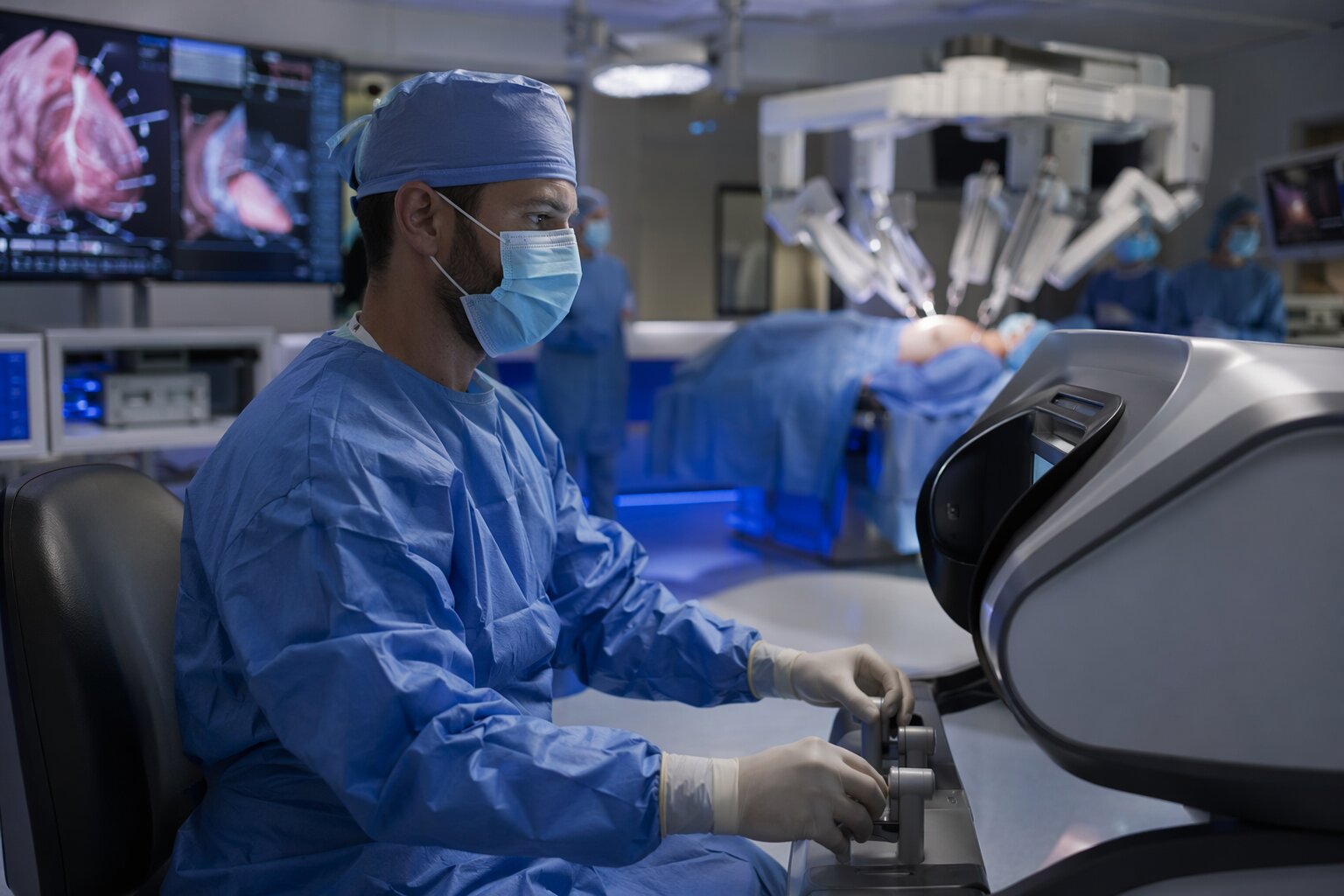
When you hear “robotic lung surgery,” you might picture a machine taking over, but in reality, it’s your surgeon in full control, using advanced tools to work through tiny incisions with remarkable precision. You may experience less pain, a shorter hospital stay, and a quicker return to your routine compared with traditional surgery. And as data on survival and cancer control continues to grow, the real question becomes…
What Is Robotic Lung Cancer Surgery?
Robotic lung cancer surgery is a type of minimally invasive surgery in which the surgeon operates through several small incisions without spreading the ribs. The surgeon sits at a console and controls small, articulated instruments that work inside the chest. Specialists such as Dr. Marco Scarci, who specialises in video-assisted thoracoscopic surgery (VATS) and robotic-assisted thoracic procedures, use these advanced techniques to help patients receive precise surgical care with reduced disruption to surrounding tissues.
Using systems such as the da Vinci platform, the surgeon’s hand movements are translated into precise movements of wristed instruments. High-definition, three-dimensional visualization provides a detailed view of lung tissue, blood vessels, and lymph nodes, allowing surgeons to navigate delicate areas with greater accuracy.
Common procedures performed with this approach include lobectomy and mediastinal lymph node dissection. Surgeons often remove multiple lymph nodes to help accurately determine the stage of the cancer and guide further treatment. The minimally invasive nature of robotic surgery may also support shorter recovery times and reduced discomfort compared with traditional open approaches when appropriate.
If necessary, the operation can be converted to an open procedure to address safety or technical concerns. Patients considering this type of treatment can learn more about the process, benefits, and considerations through this guide:
https://marcoscarci.co.uk/lung-cancer-surgery-guide-diagnosis-treatment/
Robotic Vs Open Vs VATS: Key Differences
Compared with open thoracotomy and video‑assisted thoracoscopic surgery (VATS), robotic‑assisted thoracic surgery (RATS) differs mainly in incision size, visualization, and instrument control.
Open thoracotomy requires a larger incision, rib spreading or rib resection, and more disruption of chest wall muscles, which generally results in greater surgical trauma.
Both VATS and RATS use smaller incisions and typically avoid opening the rib cage, which is associated with reduced peri‑operative pain, shorter hospital stay, and faster early recovery compared with open surgery.
VATS provides these benefits using a camera and long, rigid instruments.
RATS builds on the minimally invasive approach by adding high‑definition three‑dimensional visualization and wristed instruments that can articulate within the chest, allowing more precise movements in confined spaces.
In one reported series of 1,339 robotic lung resections, the conversion rate to open surgery was 3.7%, with 30‑day mortality of 0% and 90‑day mortality of 0.1%.
These figures suggest that, in experienced centers, robotic lung surgery can be performed with low short‑term mortality and a relatively low need to convert to open procedures.
Benefits Of Robotic Lung Surgery: Pain, Recovery, Stay
Because robotic lung surgery uses small incisions and doesn't require spreading the ribs, it generally causes less tissue disruption and pain than a traditional open operation. As a result, patients often need lower doses of strong pain medications, which can make it easier to breathe deeply, cough effectively, and move soon after surgery.
Hospital stays after minimally invasive procedures such as a robotic lobectomy are often shorter than after open surgery. Some patients may be discharged the day after surgery, and many go home within a few days, depending on their overall health and how the surgery went.
At home, many people can resume most usual daily activities within about two weeks, although this can vary by individual and by the type of work or activity.
Healthcare teams typically encourage frequent walking shortly after surgery and during recovery. Regular walking helps lower the risk of complications such as pneumonia and blood clots, and supports gradual improvement in strength and endurance.
Survival Outcomes With Robotic Lung Cancer Surgery
While robotic lung surgery is often noted for facilitating postoperative recovery, available data also suggest favorable long‑term survival outcomes for many patients with lung cancer. In large series, reported 5‑year overall survival rates are approximately 89% for stage I, 74% for stage II, and 61% for stage IIIA disease, with very low operative mortality.
Disease‑free survival appears particularly favorable in early‑stage disease, with relatively low rates of distant (about 15%) and local (about 3%) recurrence in these reports. Comprehensive lymph node assessment and a higher frequency of pathologic upstaging may contribute to these results.
However, most of the current evidence comes from observational and non‑randomized studies. As a result, it isn't yet definitively established that robotic surgery provides superior oncologic outcomes compared with video‑assisted thoracoscopic surgery (VATS) or open thoracotomy. Further randomized or rigorously controlled comparative studies are needed to clarify any differences in long‑term survival and recurrence between these approaches.
Who Is A Good Candidate For Robotic Lung Surgery?
Robotic lung surgery is most often considered for people with early-stage lung cancer, when the tumor is confined to the lung and can be removed along with nearby lymph nodes through small incisions. Whether it's appropriate depends on the cancer’s stage and location, as well as the person’s lung function, heart health, and overall fitness for anesthesia.
Individuals who are older or who've other medical conditions that increase the risks of open-chest surgery (thoracotomy) may still be candidates for a robotic approach, because it can be less invasive and may lead to a shorter recovery.
However, very large tumors, tumors invading nearby structures, or cancers in technically challenging locations may not be suitable for robotic techniques. In those situations, or when the surgeon needs direct manual assessment of the tissue, an open operation may be safer and more effective.
Decisions are typically made by a multidisciplinary team based on imaging, pulmonary function tests, and the patient’s overall risk profile.
Lung-Sparing Robotic Options: Segmentectomy And Wedge Resection
For some people with early-stage lung cancer, lung-sparing robotic procedures—segmentectomy and wedge resection—may allow removal of the tumor while preserving more normal lung tissue than a lobectomy.
In a segmentectomy, the surgeon removes the specific anatomical segment of the lung that contains the cancer.
In a wedge resection, the surgeon removes a smaller, non-anatomical portion of lung that includes the tumor and a surrounding rim of healthy tissue.
Robotic surgical platforms provide magnified 3D visualization and precise instrument control through small incisions, which can be useful for these technically demanding procedures.
These lung-sparing operations are considered only when the surgical team expects to obtain clear (negative) margins around the tumor and to perform adequate lymph node sampling or dissection.
When appropriate, they may offer comparable cancer control to lobectomy in carefully selected early-stage cases, and can be associated with shorter hospital stays, quicker recovery, and better preservation of lung function.
What To Expect Before Robotic Lung Surgery
Before robotic lung surgery, your care team evaluates whether this minimally invasive approach is appropriate and safe for your specific situation. They consider factors such as your cancer stage, tumor size and location, lung function, and overall medical history to determine whether a robotic lobectomy, segmentectomy, or an open procedure is most suitable.
You will have pre-operative appointments that may include consultations with a thoracic surgeon, pulmonologist, medical oncologist, and radiation oncologist. During these visits, the team confirms the treatment plan, reviews potential risks and benefits, and discusses alternatives.
Your surgeon will plan the operation in detail, including the location of small incisions, configuration of the robotic system (commonly a da Vinci platform), and the approach to lymph node removal for accurate staging.
Preparation for recovery also begins at this stage, covering expectations for pain management, breathing exercises, early mobilization, and an anticipated hospital stay that's often shorter than with traditional open surgery, depending on your individual condition and recovery progress.
What Happens During And After Robotic Lobectomy
During a robotic lobectomy, the surgeon operates from a console, controlling slender instruments attached to the da Vinci robotic system. These instruments are inserted through several small incisions between the ribs. A high-definition, magnified camera view allows the surgeon to identify structures clearly, carefully separate the targeted lung lobe, and remove mediastinal lymph nodes.
Lymph nodes are often taken from multiple regions (stations) in the chest to help determine the stage of the disease and guide further treatment.
After surgery, the care team emphasizes pain management to enable deep breathing, coughing, and early walking. These measures help reduce the risk of complications such as pneumonia and blood clots.
Chest tubes are usually monitored and removed when appropriate, and lung function is checked regularly.
Many patients are discharged from the hospital within a few days, depending on their overall health and recovery progress, and can often return to most routine daily activities within about two weeks, although full recovery may take longer.
What’s Next For Robotic Lung Cancer Surgery?
Looking ahead, the focus of robotic lung cancer surgery will likely shift from demonstrating basic safety and feasibility to defining clear indications, patient selection criteria, and measurable benefits over existing approaches. Ongoing and future studies are expected to compare robotic surgery with video‑assisted thoracoscopic surgery (VATS) and open thoracotomy, including in patients with more advanced disease stages, to clarify any differences in oncologic outcomes, perioperative complications, and long‑term survival.
A key area of investigation will be the quality and consistency of lymph node dissection. Researchers are likely to emphasize standardized metrics, such as the number of lymph node stations sampled and total nodes removed, to assess whether robotic platforms support more comprehensive staging and potential improvements in local control.
As more data accumulate and procedural benchmarks become established, training pathways may become more structured, particularly in high‑volume centers where case exposure is greater. These institutions are positioned to refine curricula, shorten learning curves, and define competency thresholds more precisely.
With growing technical experience and generally low conversion rates to open surgery in experienced hands, some programs may extend robotic techniques to more complex resections and anatomically precise, lung‑sparing segmentectomies. However, these expansions will likely remain contingent on maintaining adequate resection margins, robust nodal assessment, and demonstrable patient benefit, rather than on technology adoption alone.
Conclusion
Robotic lung cancer surgery gives you a powerful blend of smaller incisions, less pain, and faster recovery without compromising cancer control. By combining 3D vision, precise instruments, and lung‑sparing options, it can help you get back to your life sooner while maintaining strong survival outcomes. If you’re facing lung cancer surgery, talk with your thoracic surgeon about whether a robotic approach fits your diagnosis, overall health, and long‑term goals.
